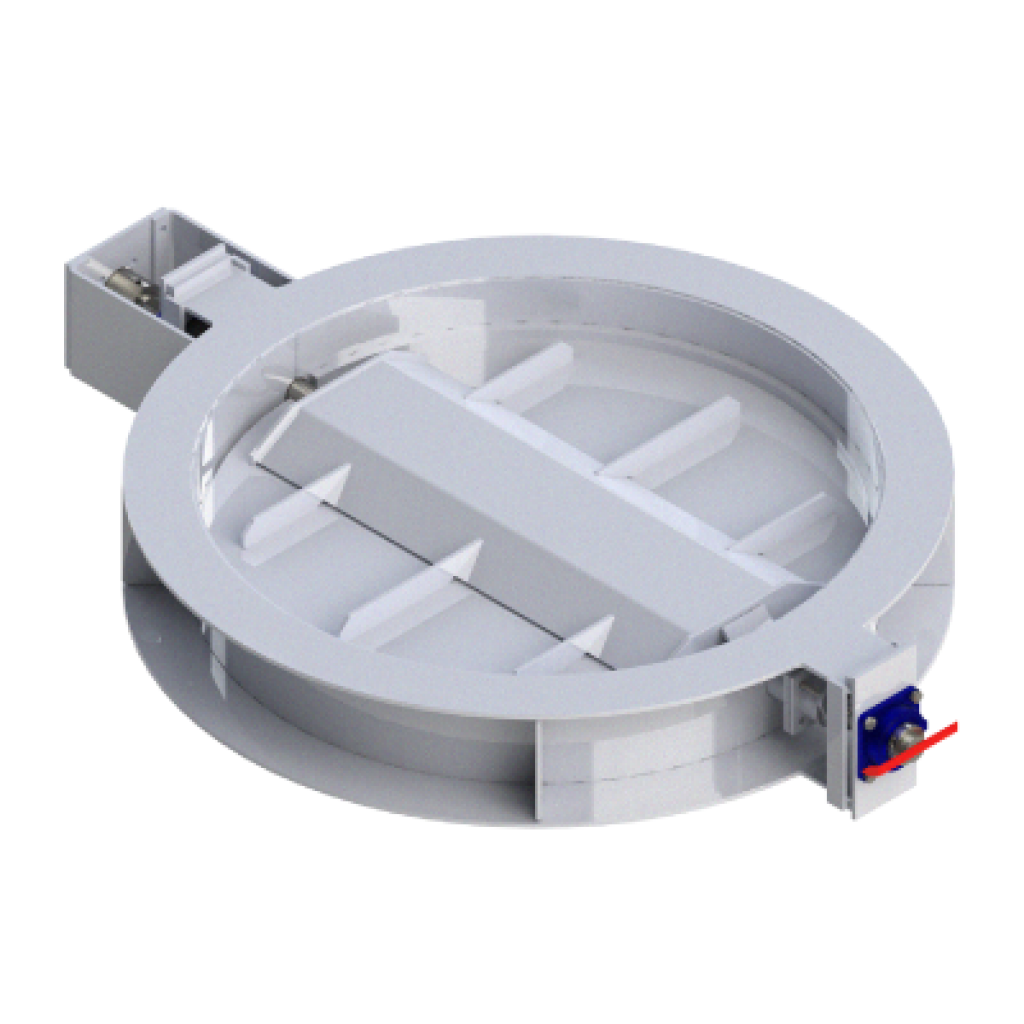
Tandem Louver Technical Dampers
Flex-Ledge Tandem Louver Technical
Tandem louvre dampers offer several advantages for industrial and commercial ventilation systems. Their dual-blade design allows for precise control of airflow, improving efficiency and reducing energy consumption. By providing enhanced sealing capabilities, they help minimize air leakage, which contributes to maintaining desired environmental conditions and lowering operational costs.
SF Pathway’s tandem louvre dampers are known for their durability and reliability, making them ideal for demanding applications where consistent performance is critical. Their ability to manage large volumes of air while maintaining low pressure drops ensures optimal system operation, and their versatility allows for easy integration into existing setups.
Frame: The damper frames will be constructed of formed channels designed for alignment bolting and seal welding in the field. The frames will be designed to resist all loads imposed by shipping, handling and installation, as well as resist all loads imposed by operating conditions. Lifting lugs will be provided in both the width and height directions to facilitate field handling. The frames will be fabricated from 3/8” A36 carbon steel.
Blades: The blades are an open truss design constructed from two skins and an internal truss assembly. In the open position, the flue gas travels between the blade skins, which minimizes pressure drop. Blade deflection is limited to 1/2” or L/360, whichever is less at design pressure to assure sealing blade integrity. The blades will be fabricated from (2) ¼” A36 carbon steel blade skins welded to a ½” thick truss plate core structure.
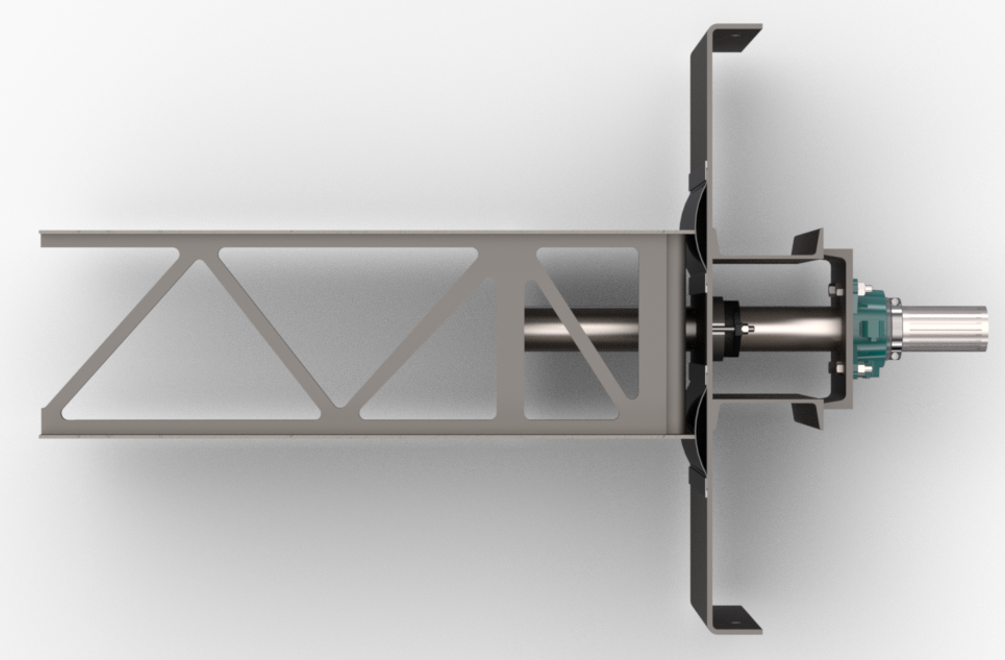
Shafts: The blade stub shafts are of machined stainless steel. The stub shafts will be welded directly to the blade to form a uniform axle with the blade and stiffener. The shafts are designed for a maximum of 1/3 yield stress in torsion and 2/3 yield stress in combined bending and torsion. Each blade will have an external indicator welded to the end of the idler shaft to show blade position.
Bearings: The exterior bearings will be pedestal mounted, flanged, permanently lubricated, self-aligning sleeve bearings. The bearings will be located adjacent to the packing to minimize deflection. Bearings will be Dodge LT700, 4-bolt flange, type bearings (or equal).
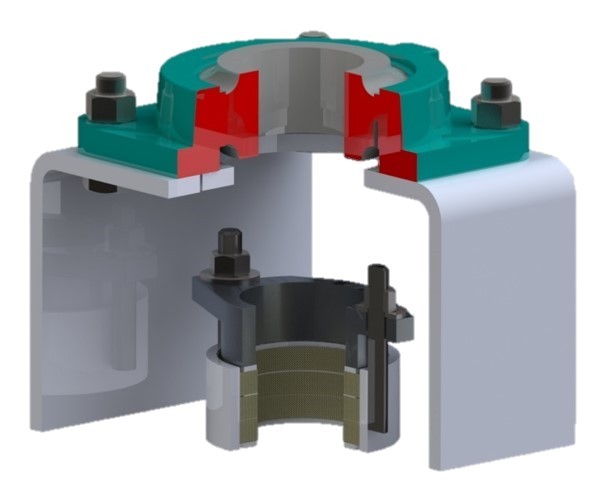
Packing: To protect the bearings from contamination and to prevent flue gases from exiting the damper, the frame is sealed with packing glands. The gland is continuously welded to the damper frame at each shaft penetration. The packing is 100% asbestos free; graphite impregnated woven fiberglass square rope. Compression is obtained through an adjustable free floating, self-aligning packing follower.
Linkage: The linkage will be of a compensating, adjustable, locking turnbuckle design, using spherical rod ends. This design is used to eliminate binding or increases in torque requirements due to thermal growth and to assure blade sealing efficiency. All connections will be precision fit to assure accurate blade adjustment and alignment and to eliminate blade flutter. The linkage will be designed with a 2 to 1 safety factor when calculating for buckling stress.
Seals: The louver dampers will utilize two rows of our Flex-Ledge metallic spring seals around the frame perimeter. These Convex metallic seals provide tight shutoff while creating minimal pressure drop and allowance for ash accumulation. These seals will be fabricated from 316L stainless steel, which has been work-hardened to retain spring properties. These seals allow for significant thermal expansion while maintaining metal-to-metal contact, allowing for tight shut-off over a large temperature range.
The dampers blades will utilize bolted leaf seals to further reduce cross blade leakage. The seals will be held in place using stainless steel hardware.
Actuator: Each damper will be operated by a single electric actuator using a 150% design safety factor based on all live and dead loads. The actuator will come equipped per the data sheet attached.
Instrumentation: Each damper will have an external 4-20mA position transmitter mounted to the non-drive side of the damper. Wiring to transmitter is considered by others.
The fans will be skid mounted and will come per the following:
(1) Arrangement 4 Blower.
Carbon steel construction
50hp motor, 3600 rpm, TEFC Premium, 460/3/60, 1.15 SF
(1) Electrically operated butterfly valve at fan outlet (Cast iron body, 316SS disc, Viton Seat)
Painted A53 pipe (up to 10’) w/ 3/8” plate flanges with all required gaskets and hardware for complete system
*Seal air fan motor starters and controls are considered by others.
** Please note quoted fan does not include an inlet silencer and will operate at approx. 105dBa @ 5’
Standard Shop Testing: Depending upon the expedited shipment requirements, the damper will be dimensionally checked, with sealing performance verified per AMCA standards. Actuators and seal air fans will be bench tested prior to shipment.
Instrumentation: No additional instrumentation has been provided. See Actuation section for Open/Close Limit switches and position transmitter information.
Paint: The external surfaces of the equipment will be blast cleaned per SSPC-SP6 and coated with one primer coat of inorganic zinc primer. Internal surfaces and stainless steel will be left uncoated.
Seal air fans, actuators, etc. will come with their manufacturer’s standard coating for the application.
Non Destructive Examination: Each damper will undergo the following NDE at our facility prior to shipment.
All welds: 100% visual examination per AWS D1.1
Welding: All welding will be done per ASME Section IX.
Industrial Applications
In power generation, they serve an essential role in controlling flue gases and ventilation within boilers and exhaust systems. Chemical and petrochemical plants rely on these dampers to manage toxic or volatile gas flows, contributing to both process efficiency and safety. Cement and mining industries employ butterfly dampers in dust collection and air handling systems, where reliability under harsh conditions is paramount. Additionally, food and beverage processors use them in sanitation-sensitive air control applications, and HVAC systems across commercial and institutional buildings benefit from their energy-efficient operation.
Butterfly Damper Fit:
- Attached or linked to piping/duct flanges or directly to duct.
- Flange connections may be alignment bolted and seal welded into the duct, or provided with bolt and gasket type connections.
- Butterfly dampers typically require between 8”-12” of duct space for installation.
Butterfly Damper Form:
- Butterfly dampers are used for duct isolation and flow control.
Butterfly Damper Function:
- Open/close applications where less than 99.5% isolation is acceptable
- Flow control/modulation