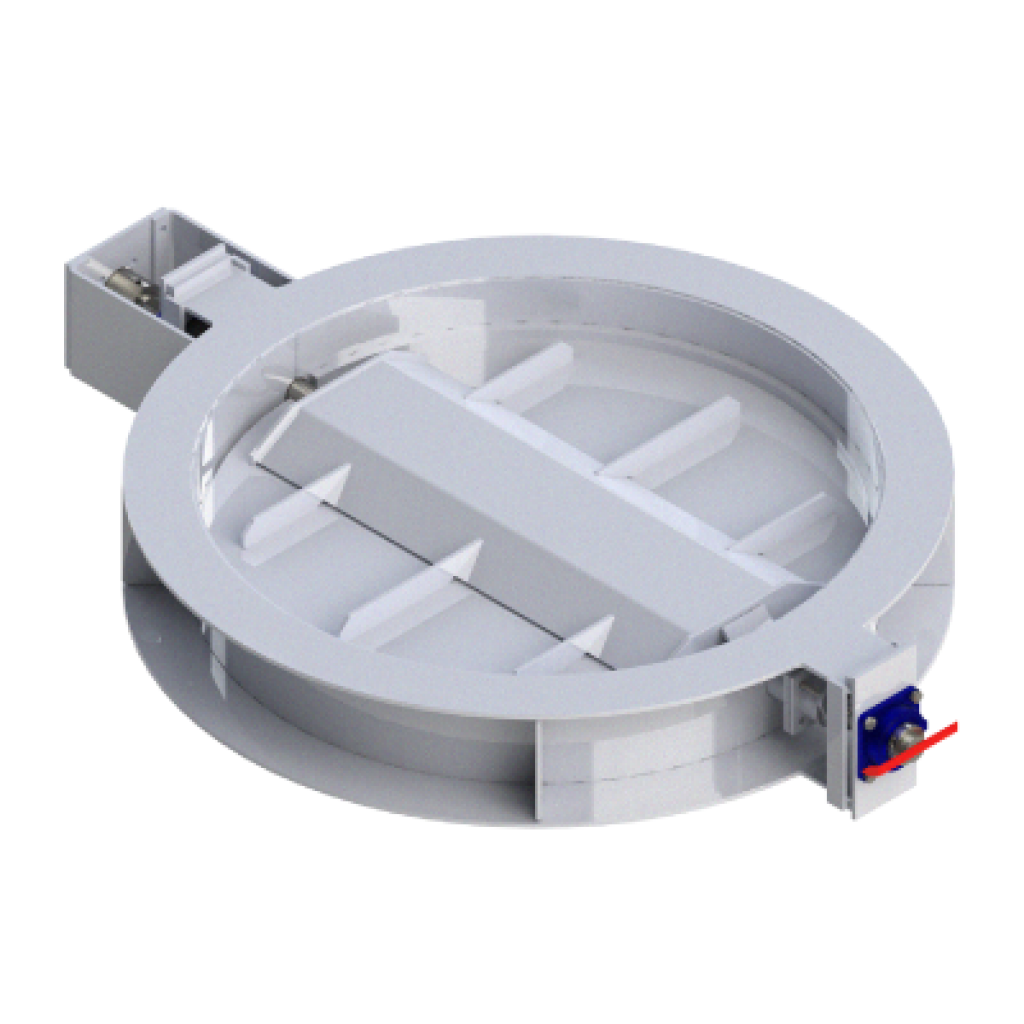
Tandem Butterfly Dampers
TANDEM BUTTERFLY Damper Design Overview
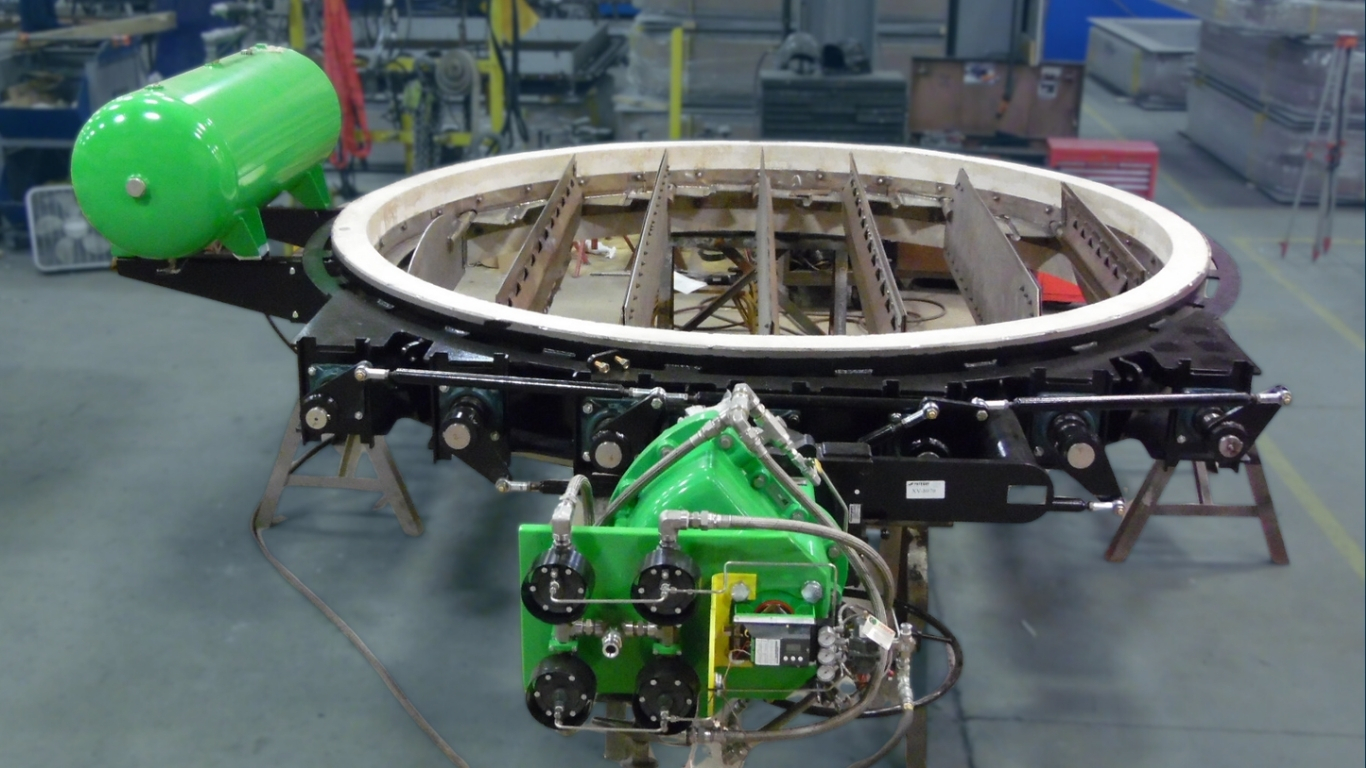
Senior Flexonics Pathway’s unique thermally compensating tandem butterfly offers 100% duct isolation with the added benefit of low system pressure drop, and a blade designed to minimize thermal distortion for high temperature applications.
Butterfly dampers are crucial components in the regulation and control of air, gas, or particulate flow within ductwork and process systems. Named from the unique “butterfly” shaped disk that pivots within a circular enclosure to allow, restrict, or shut off flow. Unlike other damper types, butterfly dampers offer swift operation, low pressure drop, and a compact design, making them indispensable in both large and small-scale industrial environments.
Butterfly dampers modulate flow by rotating the disk, which is positioned by an actuator. This versatility allows for fine control—ranging from full closure to wide-open positions—suited to the demands of complex industrial processes. Butterfly dampers are made from a range of materials, such as stainless steel, carbon steel, or specialized nickel alloys, ensuring durablity with high temperatures, corrosive environments, or abrasive particulates.
The engineering and robust construction of industrial butterfly dampers make them a preferred choice wherever precision airflow management is required, ensuring safety, process optimization, and environmental compliance across a broad spectrum of modern industries.
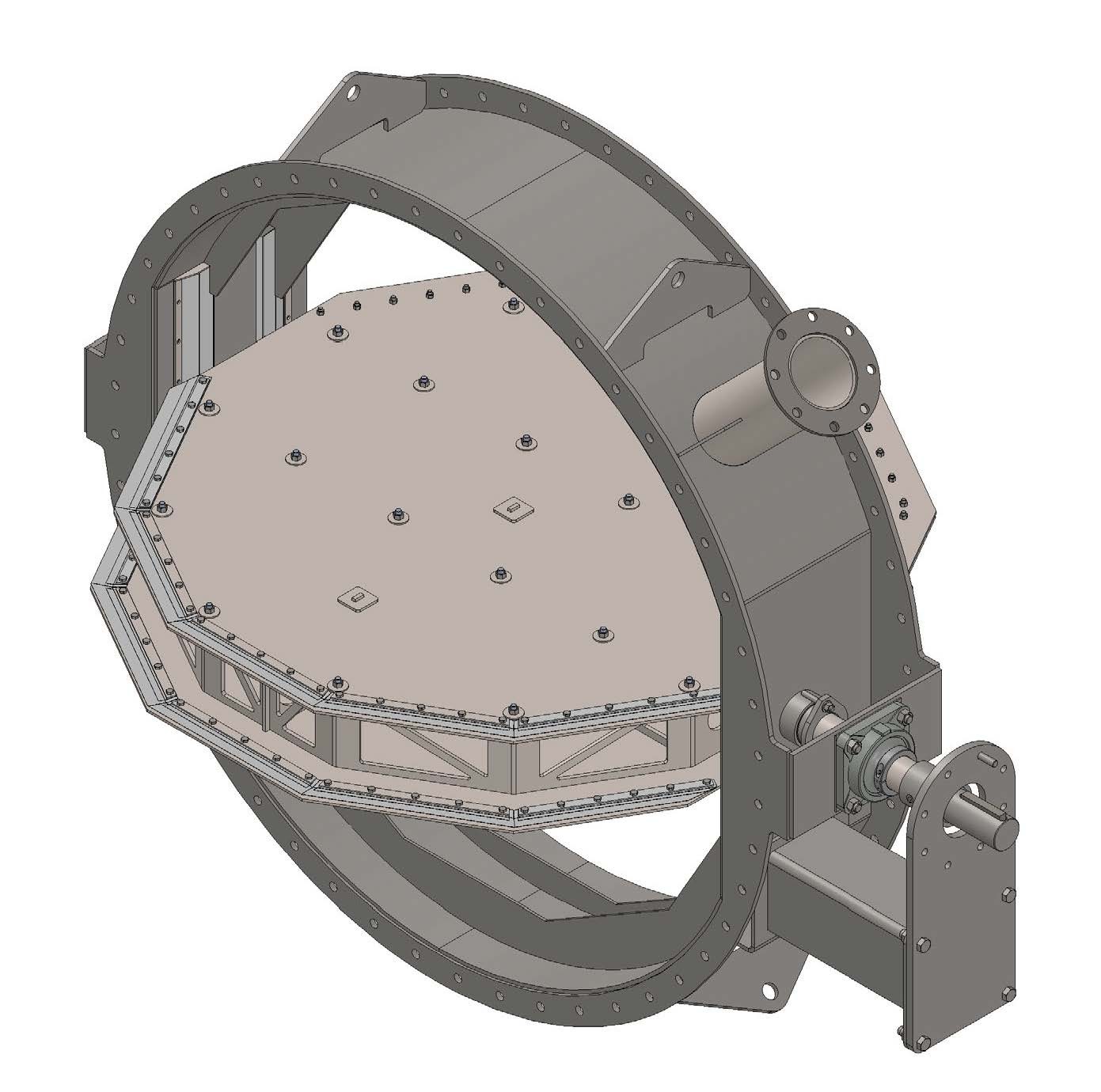
Frame: The frames will be constructed using a 3/8” thick spool with welded ½” plate flanges, designed to be bolted to the adjacent ductwork (hardware by others). The frame is designed to resist all loads imposed by shipping, handling and installation, as well as resist all loads imposed by operating conditions. The frames will be completely self-supporting, requiring no additional support for their accessories. The damper frames incorporate adequate lifting attachment points for field erection. The frames are fabricated from 304 stainless steel.
Blade: The tandem isolation damper blade design consists of two separate plates connected to a truss assembly on both sides. The blade skins are connected using thermally compensating connections to allow for independent thermal expansion of the “hot” upstream skin. (The downstream skin is welded to the truss frame.) The area between the two skins can then be pressurized by the supplied seal air system in the closed position for 100% isolation of the upstream ductwork. The blades are fabricated from ¼” and 3/8” Stainless steel.
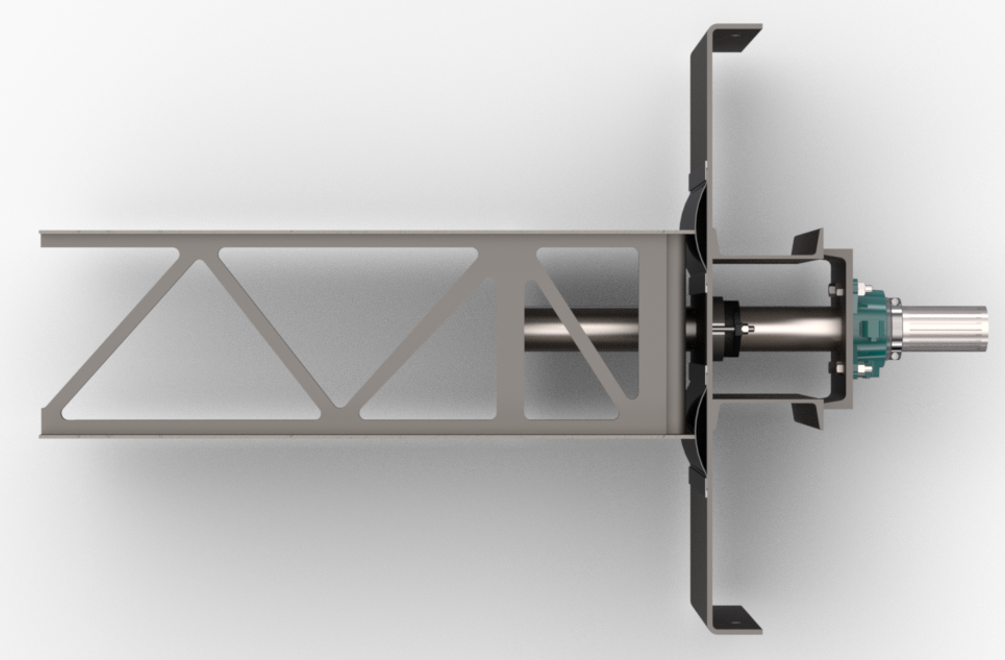
Shafts: The blade stub shafts are of machined 17-4PH H1150 steel. The stub shafts will be welded directly to the blade truss to form a uniform axle with the blade. The shafts are designed for a maximum of 1/3 yield stress in torsion and 2/3 yield stress in combined bending and torsion. The blade idler shaft end will have a yellow-painted position indicator groove to show blade position.
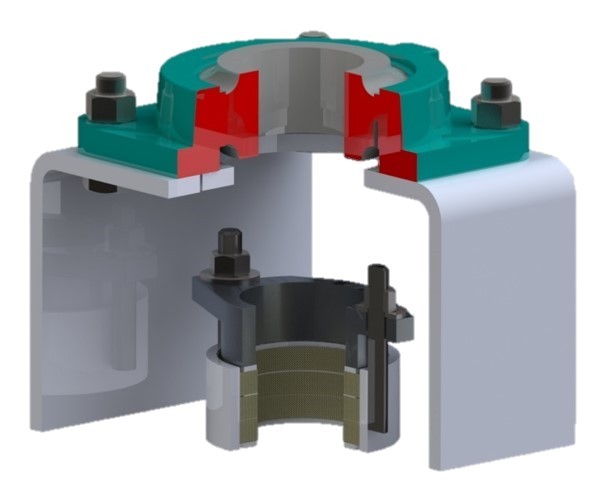
Bearings: The exterior high temperature bearings (700°F) will be pedestal mounted, flanged, permanently lubricated, self-aligning sleeve bearings. The bearings will be located adjacent to the packing to minimize deflection. Bearings will be Dodge LT700, 4-bolt flange, type bearings (or equal).
Packing: To protect the bearings from contamination and to prevent flue gases from exiting the damper, the frame is sealed with packing glands. The gland is continuously welded to the damper frame at each shaft penetration. The packing is (3) rings of 100% asbestos free; braided graphite square rope. Compression is obtained through an adjustable free floating, self-aligning packing follower.
Periphery Seals: The unique tandem blade design allows for the use of two perimeter step seals, with bolted, hardened 316L SS flexible seal segments. Along each damper sidewall, two short sections of hardened 316L SS metallic spring seal are located at the blade shaft penetration to allow the bi-plane blade to rotate through its complete travel.
Actuator: We are providing electric actuation with a 150% design safety factor based on all live and dead loads (differential pressure). The actuator will come equipped per the following:
- 460/3/60 power supply; 15 Minute duty motor, NEMA 4X/6 enclosure
- 4 counter gear driven limit switches; Open/close torque switches
- Space heater in the switch compartment
- Side mounted hand wheel override
- 1 Integral motor control interface board with a 24V optically isolated input, 3 pushbuttons (O-S-C), 3 indicating lights and selector switch (L-O-R), and integral motor starters (vendors std.).
- Open /close time: ~30 seconds
Seal Air System: Our proposal is based on an operating differential pressure(customer to confirm), of providing a 3”w.c. pressure barrier.
Per Damper – (1) Seal-Air Inlet Valve mounted at each damper
- 6” High Temperature Tadpole Seated
- Electrically operated; actuator includes positioner (with gauge) to allow for valve throttling at each damper and (2) SPDT end of travel limit switches w/ visual beacon indicator
- (2) SPDT end of travel limit switches w/ visual beacon indicator
- Skid for each damper
- (1) fan per damper, 2 fans total
-
- (1) 20-40hp, 3600rpm TEFC premium, arrangement 4 pressure blower (skid mounted)
- (2) Blower Inlet Silencers with inlet bird screens
- (1) 10” CL150 flanged connection for customer ductwork
- Electrically operated; actuator includes positioner (with gauge) to allow for valve throttling at each damper and (2) SPDT end of travel limit switches w/ visual beacon indicator
- 15’ of piping and (1) elbow included.
Standard Shop Testing: Each damper will undergo our standard, operational shop test, which includes inspection, dimensional and fit-up verification and damper operation via the actuator- open/close five times, and undergo a standard “gap map” to verify sealing performance per AMCA guidelines.
One damper will undergo an operational test for smooth and trouble-free operation at maximum design range temperature. This is performed by holding the damper at temperature for 10 minutes, shutting off the heat source, and immediately cycling the damper. Any modifications made to tested dampers shall also be made to additional dampers of same type and size.
Instrumentation: No additional instrumentation has been provided. See Actuation section for Open/Close Limit switches and position transmitter information.
Paint: NONE REQUIRED, Stainless Steel Construction.
Actuators, seal air fans, valves, will come their manufacturers’ standard for the application.
Non Destructive Examination: Each damper will undergo the following NDE at our facility prior to shipment.
All welds: 100% visual examination per AWS D1.1
Welding: All welding will be done per ASME Section IX.
Industrial Applications
In power generation, they serve an essential role in controlling flue gases and ventilation within boilers and exhaust systems. Chemical and petrochemical plants rely on these dampers to manage toxic or volatile gas flows, contributing to both process efficiency and safety. Cement and mining industries employ butterfly dampers in dust collection and air handling systems, where reliability under harsh conditions is paramount. Additionally, food and beverage processors use them in sanitation-sensitive air control applications, and HVAC systems across commercial and institutional buildings benefit from their energy-efficient operation.
Butterfly Damper Fit:
- Attached or linked to piping/duct flanges or directly to duct.
- Flange connections may be alignment bolted and seal welded into the duct, or provided with bolt and gasket type connections.
- Butterfly dampers typically require between 8”-12” of duct space for installation.
Butterfly Damper Form:
- Butterfly dampers are used for duct isolation and flow control.
Butterfly Damper Function:
- Open/close applications where less than 99.5% isolation is acceptable
- Flow control/modulation