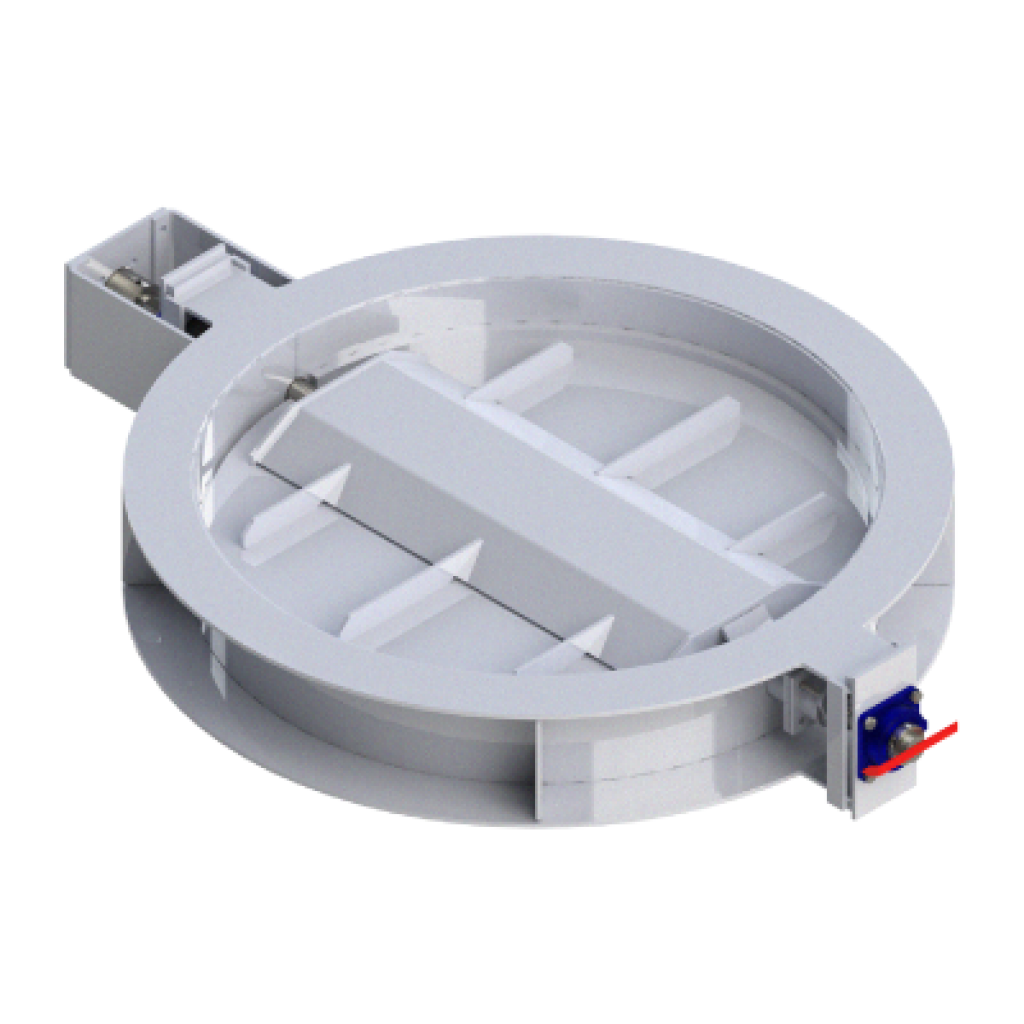
Flex-Seat Guillotine Dampers
Flex-Seat Guillotine Technical Description
The Flex-Seat Guillotine damper was developed to address the problems commonly found with guillotine dampers in Utility and Industrial isolation service. Some of the specific problems addressed include: failure and stretching of drive chain arrangements, premature seal failures, blade warping due to rapid thermal expansion, and localized corrosion due to seal air inclusion in the open position. The Flex-Seat Guillotine addresses all of these too common guillotine damper problems with our “ENGINEERED SOLUTION”.
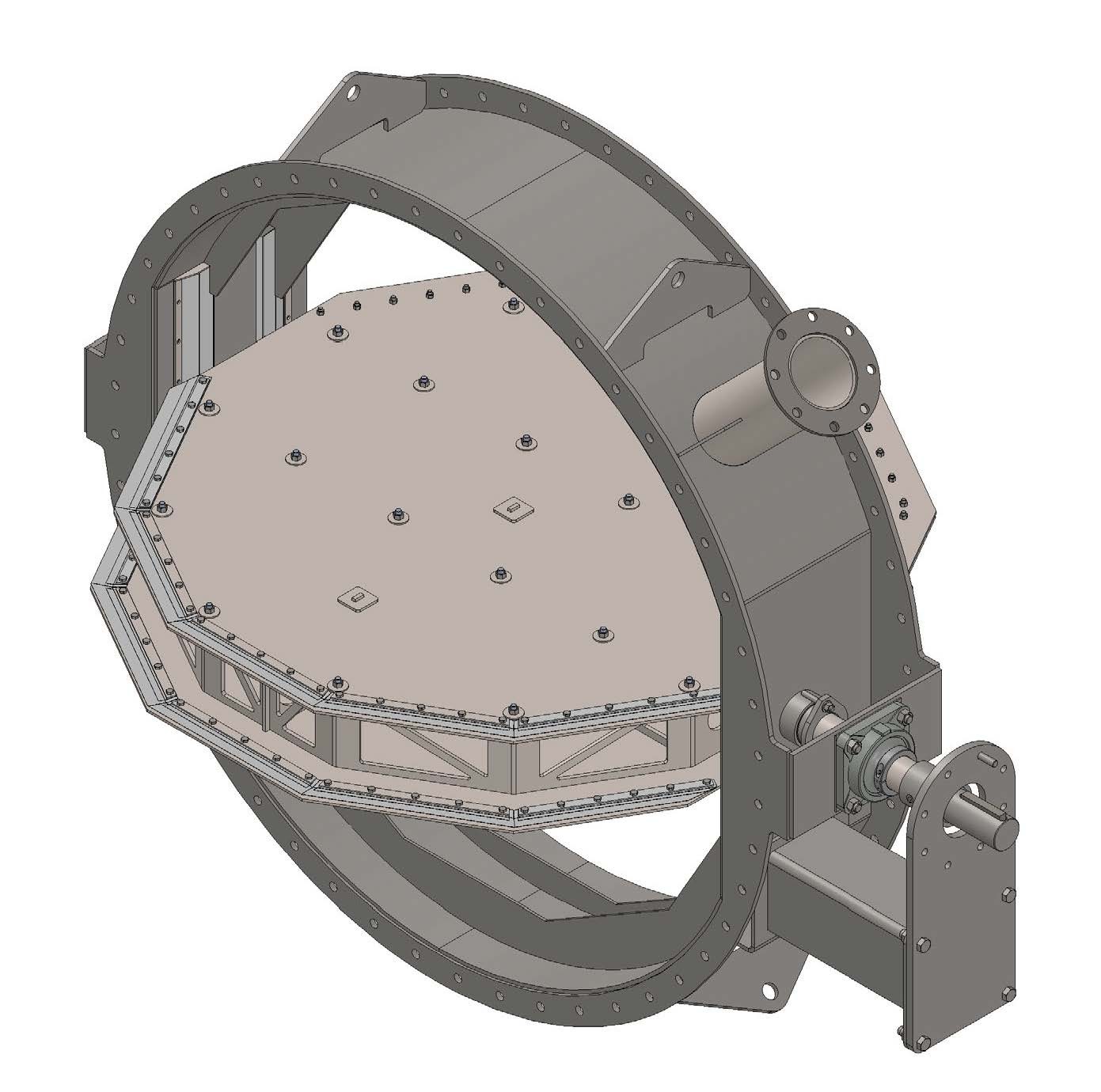
Frame: The Flex-Seat Guillotine is a “Hot Design” because the seals are mounted inside of the damper frame in the “hot” gas path. Because there are no external seal cavities, there are no areas that can fill with particulate. The frames will be fabricated from 316L stainless steel. The frames will be designed to resist all loads imposed by shipping, handling, and installation, as well as resist all loads imposed by operating conditions. The frames will be suitable for bolting to adjacent ductwork and be completely self-supporting requiring no additional support for its accessories. Lifting lugs will be provided in both the width and height directions to facilitate field handling.
Gas Tight Bonnet: The damper bonnet is a gas tight enclosure that houses the Flex-Seat blade in the open position. The bonnet has been suitably reinforced to withstand system forces as well as to provide structural support to the drive mechanism. The gas tight bonnet provides integrity to the duct system by not allowing leakage to or from the damper to atmosphere.
Blades: The Flex-Seat guillotine uses a unique compound blade design. The blade periphery is constructed of a formed channel perimeter, connected to a reinforced center membrane section. This design makes the blade both structurally rigid to withstand system pressures, and torsional flexibility to resist binding. The blades will be fabricated from 316L stainless steel, using a 1/4” thick perimeter channel, and a 3/16” stiffened center membrane.
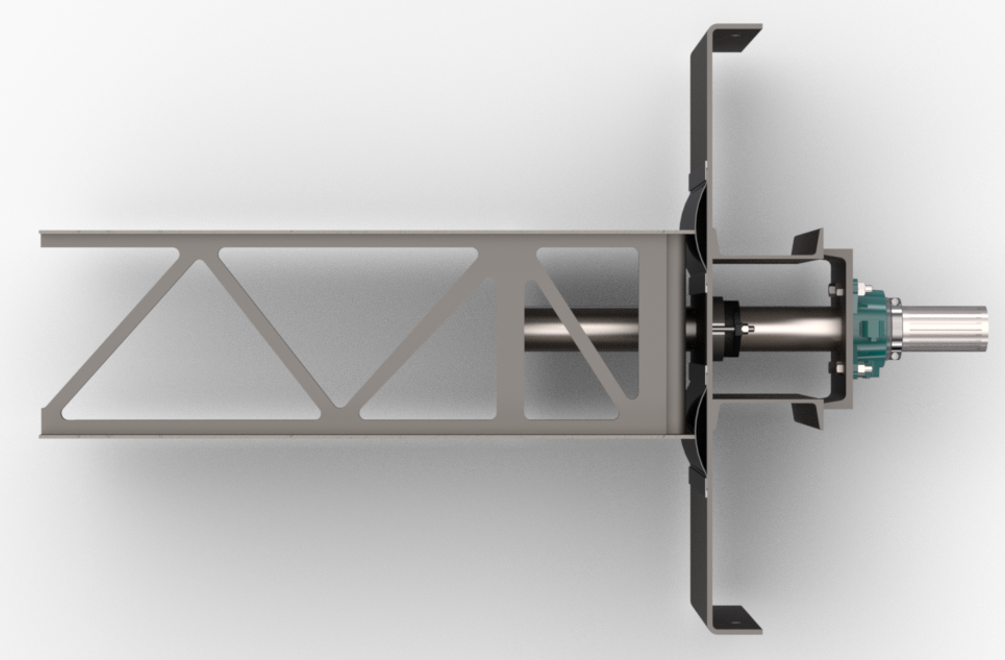
Seals: The Flex-Seat damper utilizes a convex work hardened 316L seal in lieu of the conventional leaf style seal. The one-piece Flex-Seat seal acts as a labyrinth that restricts cross blade leakage in both directions. An inverted channel that both restricts seal movement and acts as the blade guide rigidly backs the seal. By limiting the actual seal deflection to a maximum 1/4” the Flex-Seat seal exhibits greater seal life compared to conventional seals, which must deflect to accept full blade thickness, and eliminates external seal chambers, which often pack with particulate.
Actuation: The damper blades are operated by using an electrically powered rack & pinion type drive arrangement. The open design rack is welded directly to the top of the blade to assure positive engagement and smooth operation. The pinion is a hardened carbon steel sprocket that is direct coupled to the self-locking worm gear. The close coupled rack & pinion drive system, with its rugged self-cleaning profile, offer smooth dependable operation with no periodic maintenance required.
The pin racks are fabricated using 316L stainless steel racks and round bar pins.
The sprockets maintain engagement to the pin rack using spring loaded “tensioner” assemblies. These assemblies are factory set and do not require adjustment. The tensioner uses a ductile iron puck to allow the blade to slide smoothly past, while maintaining proper sprocket tooth engagement.
The drive actuators have been selected using a 150% design safety factor based on all calculated live and dead loads and will come equipped per the following:
- 460/3/60 power supply; 15 Minute duty motor, NEMA 4X/6 enclosure
- 4 counter gear driven limit switches; Open/close torque switches
- Space heater in the switch compartment
- Side mounted hand wheel override
- Integral motor control interface board with a 120V optically isolated input, 3 pushbuttons (O-S-C), 3 indicating lights and selector switch (L-O-R), and integral motor starters (vendors std.).
Drive Shafts: The damper drive shafts are machined from 17-4PH stainless steel. 17-4PH has a yield strength over 3 times that of 304SS, while still offering good corrosion resistance. The drive shafts have been sized using 0.66% of yield strength using 3 times the actuator output torque as specified.
Bearings: The damper will use Dodge “Type E” roller bearings. The bearings are mounted on an external bracket that allows for packing gland maintenance without bearing removal.
Packing Assembly: To prevent leakage to atmosphere, the damper housing shaft penetrations are sealed with a compressible packing assembly. This multi-layered assembly consists of (3) layers of graphite square rope packing.
Seal Air Assembly: The dampers will come with an integral damper mounted seal air system which includes:
– (1) Arrangement 4 pressure blower w/ 15hp motor
– (1) Resilient seat butterfly valve w/ double acting pneumatic actuator (120V solenoid & filter regulator)
Surface Prep and Paint: None required due to stainless steel construction.
Actuators and instruments will come per manufacturer’s standard based upon the application.
Non Destructive Examination: Non-destructive examination will be conducted per the following:
- All welding processes and certifications will be conducted per AWS D1.1 and/or ASME section IX.
- All welds will be 100% visually inspected
Testing: The damper will be assembled and tested prior to shipment to ensure correct fit up and operation. Each damper will undergo the following testing:
- Open/close cycle testing, 3 complete cycles (horizontal position)
- Instrumentation verification testing
- Leakage testing via. Seal gap measurement per AMCA standards
- Seal air performance testing
Preparation for Shipment: The dampers will ship complete, with actuators/instruments removed to prevent damage during transit. Openings will be covered in plywood and shrink wrapped for protection during storage.
The equipment has been designed to be shipped blocked on flatbed trucks, tarped for protection. Actuators will ship in the crates they were provided in for protection. At this time no other specialty crating has been included.
Commissioning: The equipment being proposed requires a significant degree of technical expertise to guarantee its proper installation, and provide you with optimum performance. Please consider the use of SFP-Metroflex technical supervision/commissioning during the installation. Proper installation/commissioning will ensure that 100% of your warranty remains in force. During this trip, a SFP-Metroflex technician will check or oversea proper field splicing, proper blade sealing, set actuator torque and limit-switches, and inspect installation to ensure owners long lasting, trouble free operation of the dampers.
Industrial Applications
In power generation, they serve an essential role in controlling flue gases and ventilation within boilers and exhaust systems. Chemical and petrochemical plants rely on these dampers to manage toxic or volatile gas flows, contributing to both process efficiency and safety. Cement and mining industries employ butterfly dampers in dust collection and air handling systems, where reliability under harsh conditions is paramount. Additionally, food and beverage processors use them in sanitation-sensitive air control applications, and HVAC systems across commercial and institutional buildings benefit from their energy-efficient operation.
Butterfly Damper Fit:
- Attached or linked to piping/duct flanges or directly to duct.
- Flange connections may be alignment bolted and seal welded into the duct, or provided with bolt and gasket type connections.
- Butterfly dampers typically require between 8”-12” of duct space for installation.
Butterfly Damper Form:
- Butterfly dampers are used for duct isolation and flow control.
Butterfly Damper Function:
- Open/close applications where less than 99.5% isolation is acceptable
- Flow control/modulation