
Fabric Expansion Joint
Longevity and reliability for industrial infrastructure
Fabric expansion joints are engineered to accommodate thermal movement, vibration, and misalignment in ductwork and piping systems, particularly where rigid metallic connections would be impractical. Their construction typically involves multiple layers of high-performance fabrics—such as PTFE, silicone, or elastomeric materials—reinforced with insulation and abrasion-resistant covers. This multi-layered approach provides flexibility, chemical resistance, and the ability to withstand high temperatures and pressures commonly encountered in industrial environments.
Engineering considerations for fabric expansion joints include the selection of fabric type based on the operating conditions, such as temperature, pressure, and exposure to corrosive gases. The joints must also be designed to maintain airtightness and durability under frequent cycling and mechanical stress. Advanced designs may integrate modular construction for ease of installation and replacement, as well as protective shields or flow liners to guard against particulate erosion and mechanical damage. Fabric expansion joints play a vital role in ensuring the reliability and longevity of ductwork and piping systems in power generation, petrochemical, and other heavy industrial applications.
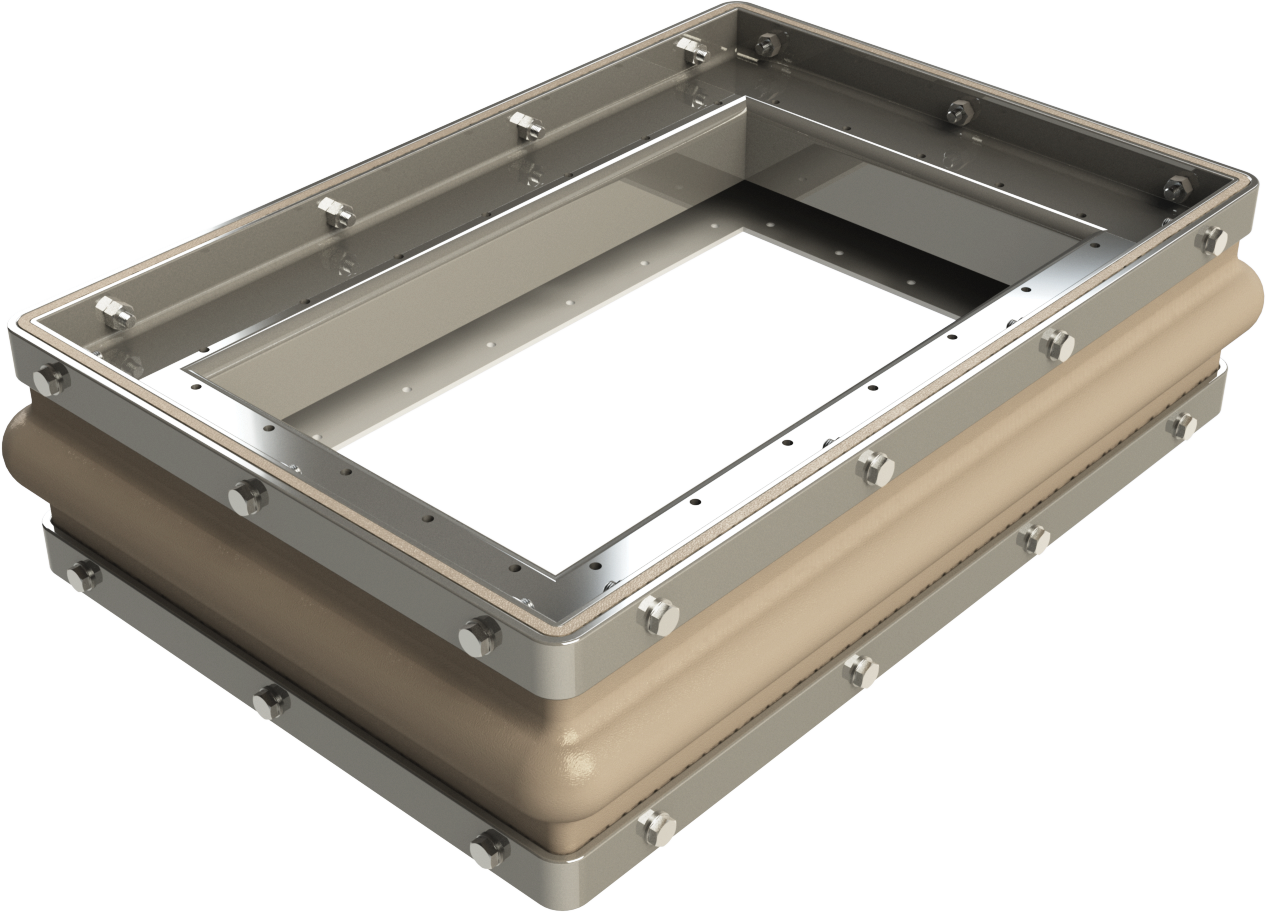
Fabric Expansion Joint Fit:
- Belts are attached by bolting to angle or plate flanges, or duct sections.
- End connections may conform to ducting sizes, or customer designed.
- Fittings may be the same at each end or different.
- Corners are typically 90 degree, but may also be rounded.
Fabric Expansion Joint Form:
- One rectangular flow area non-metallic belt.
- Typical dimensions of 12” x 12” minimum, up to 240” square. Overall length may vary, typically within the range of 12” to 48”.
- Additional accessories maybe incorporated such as load
bearing restraints, movement limiters, protection devices.
Fabric Expansion Joint Function:
- Absorbs ducting thermal or vibratory movement, primarily axial and lateral.
- Movement amplitude varies, typically within the range of 1/4” to 10”.
- Movement frequency typically is low cycle (1 to 100 cycles per year).
Industrial Applications
Fabric expansion joints are utilized in a diverse range of industries where ductwork and piping systems must accommodate thermal movement, vibration, and misalignment. Power generation plants depend on these joints to manage temperature fluctuations and ensure the integrity of exhaust and flue gas systems. In petrochemical and chemical processing facilities, fabric expansion joints are critical for handling corrosive gases and maintaining system flexibility under challenging operating conditions. Heavy industrial sectors, such as steel manufacturing, mining, and pulp and paper, also employ fabric expansion joints to address mechanical stresses and prevent damage caused by particulate erosion or thermal expansion. Their adaptability and robust performance make them essential components in maintaining the longevity and reliability of industrial infrastructure.
Features
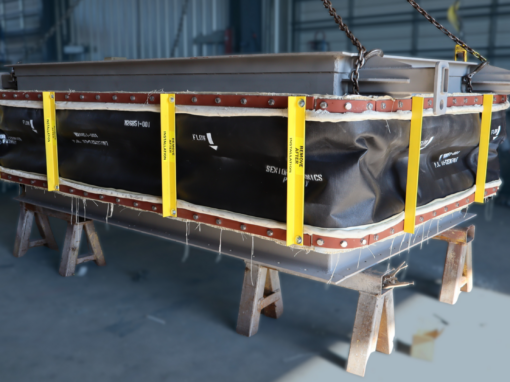
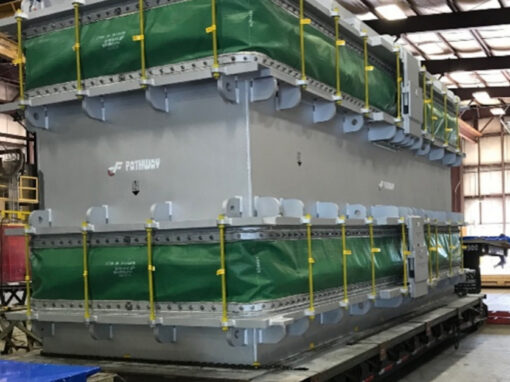
- Cost efficient for large ducting applications
- Lower initial cost compared to a metal expansion joint
- Lower repair/replacement cost compared to a metal expansion joint
- Can be installed over existing metal expansion joints
- Negligible spring forces
- Large movement capacity
- Can absorb movements in multiple planes
- No size limit (large fabric expansion joints can be provided in multiple pieces)
- Bolt-in or weld-in
Applications
- Flexibility and range of motion in small areas in ducting systems, low pressure, or other applications where lower cost and range of motion, can make them a better fit than a metal expansion joint.
Operating Range
- Up to ±5psig depending on applications
Materials
Belt materials
- Teflon
- Darlyn
- Viton
- EPDM
- Composite Teflon
Frame materials
- A36
- A588 (Corten)
- A516/70
- Stainless steel
- Other alloys